
AI Trading Agent vs. Robo-Advisor: Different Machines
Robo-advisors decide for you; AI trading agents execute your own rules. Compare control, fees, transparency, and failure modes to pick the right machine.
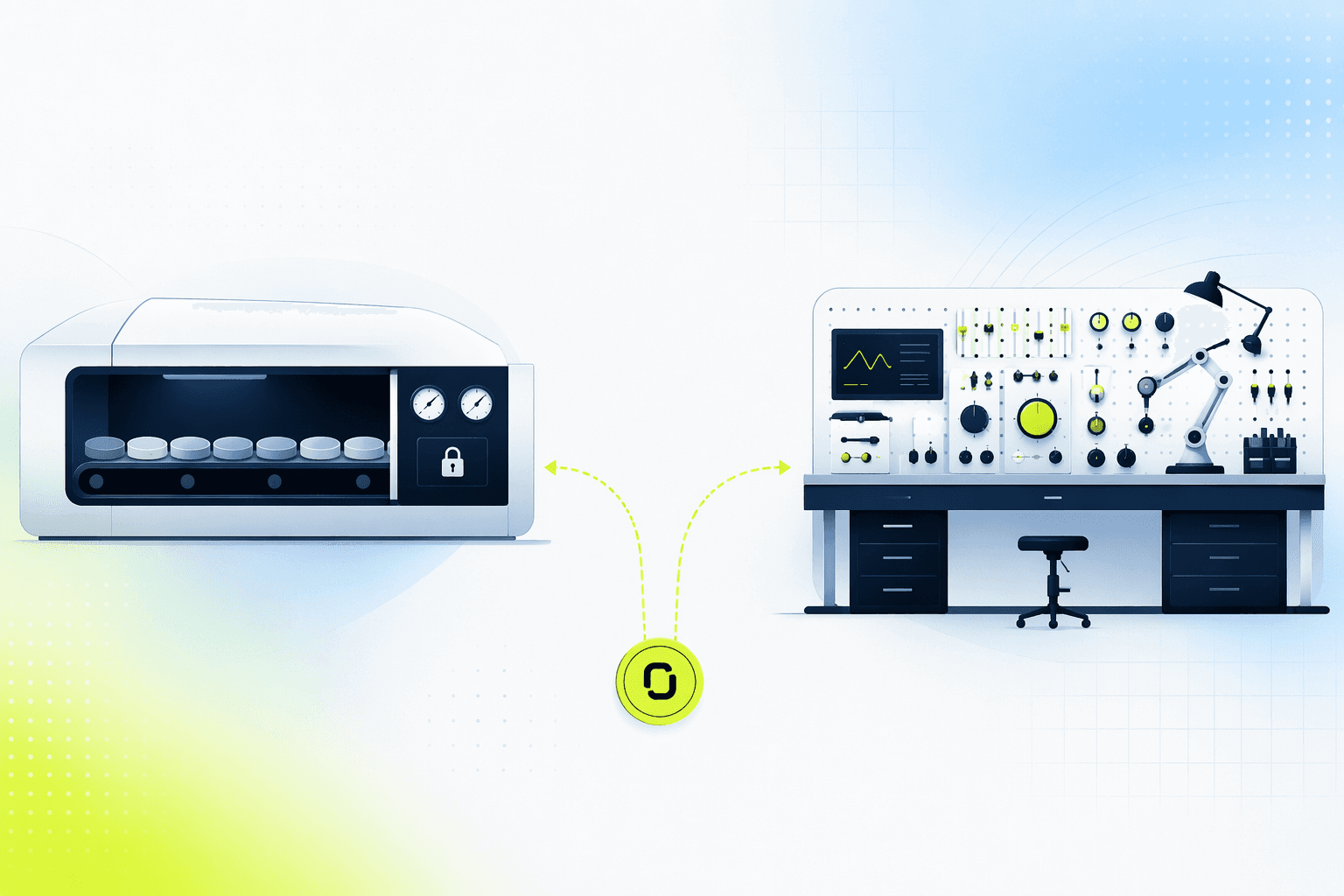
Search engines treat "ai trading agent vs robo advisor" as a comparison between two brands of the same appliance. It isn't. A robo-advisor is a delegation machine: you hand over money and a risk profile, and the provider's model portfolio does everything else. An AI trading agent is an execution machine: you supply the strategy; it executes your rules with mechanical discipline. Confusing the two leads people to buy the wrong kind of automation. This article compares them on who decides, customization, cost, transparency, effort, and failure modes, then maps who should pick which, because some readers genuinely belong with the robo.
What a robo-advisor actually does
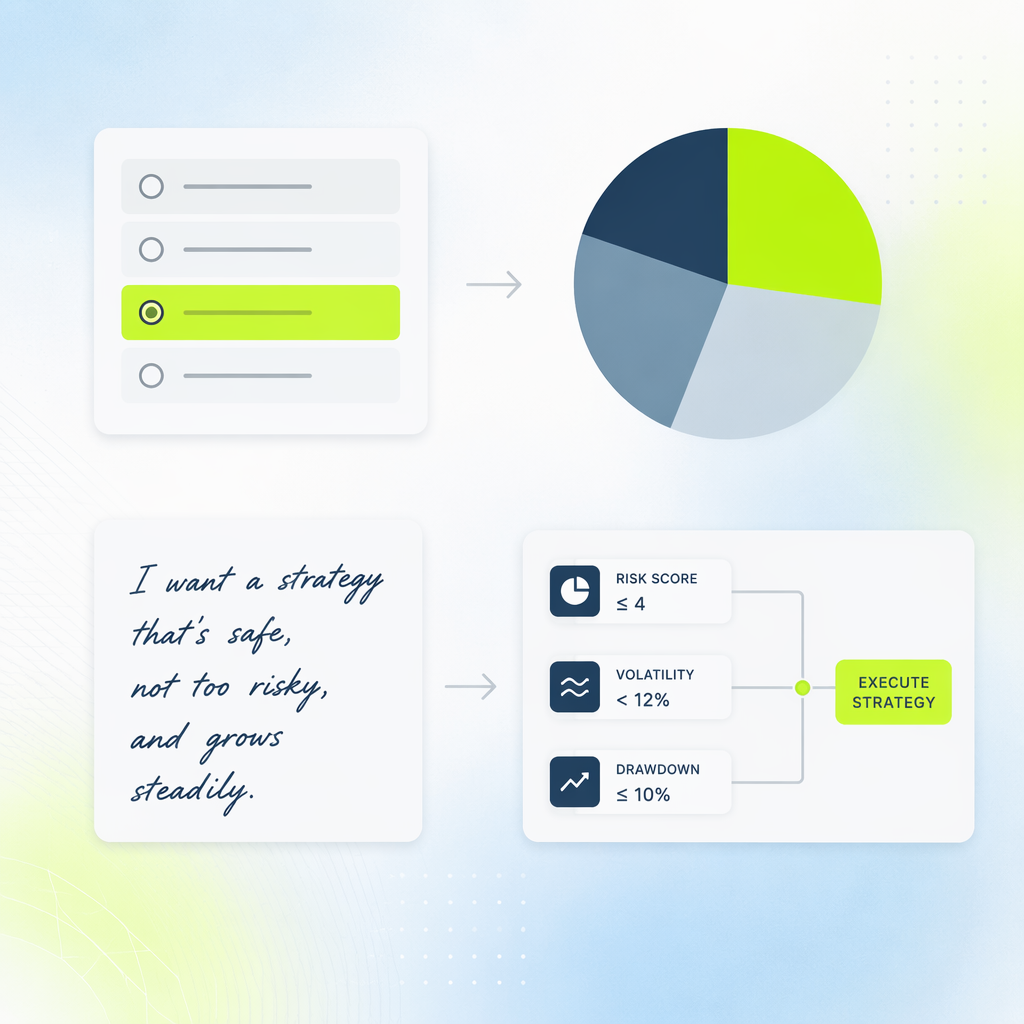
A robo-advisor runs a simple, well-tested pipeline. You answer a questionnaire about age, income, horizon, and how you would feel about a 20% drawdown. The answers map you to a risk bucket. The bucket maps to a model portfolio, typically a handful of index ETFs across stocks and bonds. From then on, the service invests your deposits, rebalances periodically, and in some cases harvests tax losses.
The essential feature is that the provider owns the strategy. You never specify an entry rule or an allocation. You picked a risk level; everything downstream is their investment committee's judgment, applied identically to everyone in your bucket. That is not a criticism. Standardization is why the product scales and why it costs little to operate.
It scales impressively. The global robo-advisory market reached roughly $10.9 billion in 2025 and is projected at $14.1 billion for 2026, on a path toward about $102 billion by 2034 (Fortune Business Insights, 2026). The largest single robo-advisor manages around $300 billion in client assets (Motley Fool Money research, 2025). Millions of people have concluded that outsourcing the whole problem is worth an annual fee, and for many of them the math holds up.
What you give up is any ability to express a view. If your bucket's model holds no commodities and you want commodities, there is no field for that. The questionnaire is the entire interface.
What an AI trading agent does instead
An AI trading agent inverts the ownership. You describe the strategy; the machine executes it. The agent watches markets continuously, checks your conditions against live data, and places orders through your own broker or exchange account, inside risk limits you set. If you're new to the category, the full definition is covered in our guide to what agentic trading is.
Concretely, on a platform like Obside you might type: "Keep my portfolio at 60% a global equity ETF, 30% an aggregate bond ETF, 10% BTC. Rebalance whenever any weight drifts more than 5 points from target. Never sell more than 15% of a position in a single order." The copilot restates that as monitored conditions and order logic, you approve it, and it runs first as a paper agent against live data before touching real money.
Notice what happened: the weights, the drift band, and the order cap were all yours. The platform contributed translation, monitoring, and disciplined execution. No questionnaire decided anything. That also means nobody saved you from a bad allocation. The strategy being yours is the entire point, and the entire risk.
AI trading agent vs. robo-advisor: six dimensions that matter
Put side by side, the two products barely overlap.
| Dimension | Robo-advisor | AI trading agent |
|---|---|---|
| Who decides the strategy | The provider's model portfolio | You, explicitly |
| Customization | A risk slider, little else | Any rule you can state precisely |
| Cost structure | Annual % of assets under management | Platform subscription or usage, plus broker costs |
| Transparency | Holdings visible; methodology is theirs | Every rule visible because you wrote it |
| Effort required | Minutes per year | Hours to design, then ongoing review |
| Accountability | Shared with the provider's model | Entirely yours |
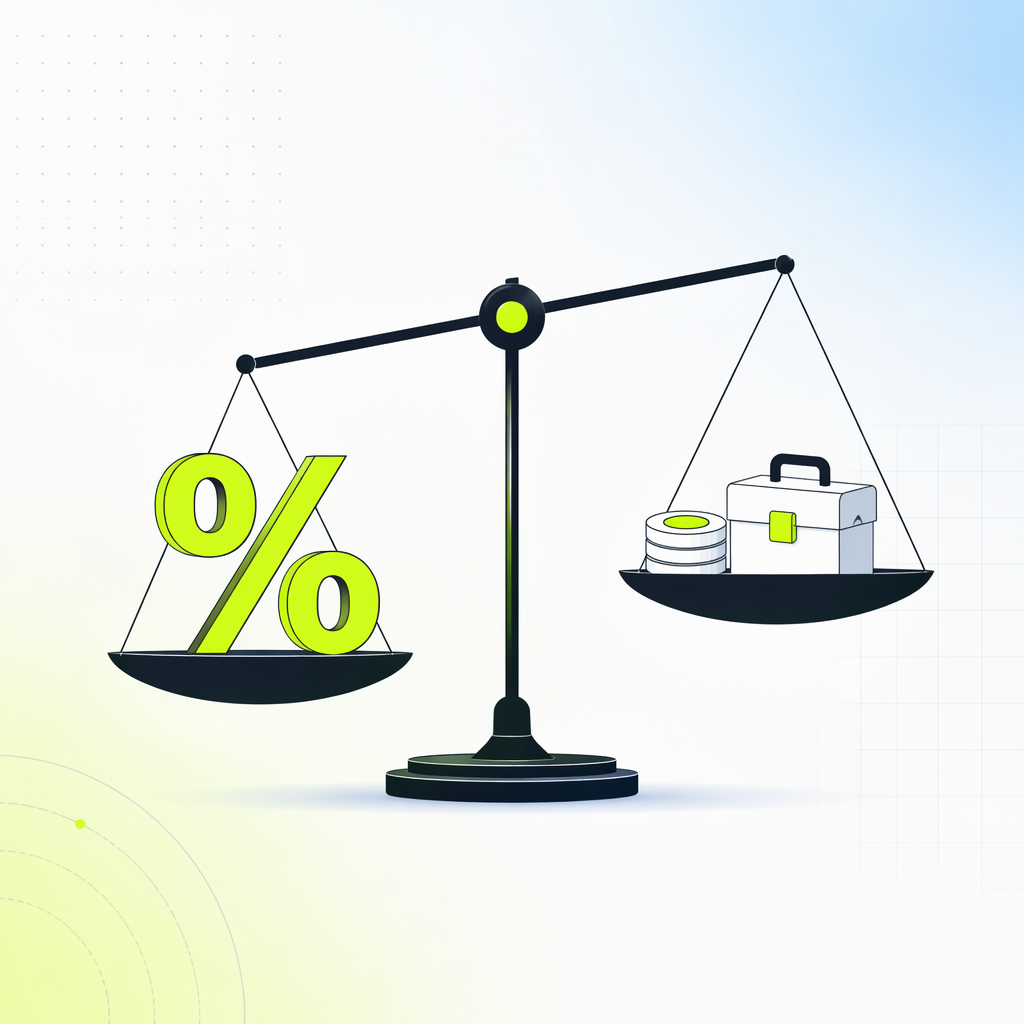
The fee line deserves a closer look. A management fee is charged on assets, so it grows with your account whether or not anything happens. On a large balance over decades, a fraction of a percent compounds into real money. Agent platforms invert this: you pay for the tooling, not a percentage of wealth. Building a personal index with your own target weights, as Obside's Custom ETF Builder does, carries no management fee beyond standard broker costs. Whether that trade is favorable depends on your balance and how much the tooling costs you per year, so run your own numbers.
Transparency splits the same way. A robo shows you what you hold but not the full reasoning behind the model. An agent can't hide its reasoning from you, because you are its reasoning.
How each one fails
Fair comparison requires naming both failure profiles, and they are very different animals.
The robo-advisor's failures are quiet. A questionnaire can mis-profile you: people confidently claim tolerance for a 30% drawdown until they live through one, then sell at the bottom and lock in a loss the model never chose. A robo does not stop you from panic-withdrawing; it only makes staying invested easy. The one-size model is another slow leak. Your bucket's portfolio was designed for a statistical cohort, not for the person whose employer stock already dominates their net worth.
The agent's failures are loud and self-inflicted. The machine will execute a bad strategy with the same discipline as a good one, faster than you could have damaged yourself manually. Overfit backtests flatter ideas that collapse live. Vaguely stated intent gets translated into rules you didn't quite mean. None of these are the automation's judgment failing, because the automation has no judgment. It has yours, amplified.
This is why serious agent platforms enforce a graduation path. On Obside, an automation is backtested against years of history, then paper-traded on live data with the same risk controls, and only then allowed to route real orders, with position sizing, stops, and drawdown caps applied at execution time. The discipline exists precisely because the strategy author is fallible.
A decision framework: who should pick which
Forget the marketing on both sides and start from what you actually want to own.
Choose a robo-advisor if you don't want a strategy. If your honest goal is "invest my savings sensibly while I think about literally anything else," the robo is the right machine, and an agent platform would be a hobby you didn't ask for. Delegation is a legitimate choice, not a failure of sophistication.
Choose a robo-advisor if you have no view and no desire to develop one. An agent executing no thesis is an expensive way to do nothing. The questionnaire-and-bucket model exists precisely for this reader.
Choose an agent platform if you have opinions your bucket can't hold. Wanting to cap any single position at 5%, hold a specific asset the model excludes, or run a personal index with your own weights are all views. A robo has no field for them; an agent is built from them.
Choose an agent platform if you want long-term discipline with control. Automated contribution schedules, drift-band rebalancing, and pre-committed drawdown rules give you the robo's consistency without adopting anyone else's allocation. Our guide to AI for long-term investing covers this stack in depth.
Choose an agent platform if you trade at all. Robos don't do entries, exits, or conditions. That entire universe belongs to agents.
Consider both. A robo core holding your serious savings, with a small agent-run satellite expressing your views, is a coherent setup, not a compromise. If you go the agent route, evaluate platforms deliberately; our 12-criteria checklist for choosing an agentic trading platform is the due-diligence companion to this article.
Where to go from here
The comparison resolves cleanly once you see the products as different machines. A robo-advisor sells you a decision so you don't have to make one. An AI trading agent sells you execution of decisions only you can make. Pick based on which side of that line you want to live on, and be honest about the effort each side demands. If you land on the agent side, Obside lets you state your strategy in plain language, validate it against history, rehearse it on paper, and run it live under your own guardrails.
Educational content only. This is not investment advice. Trading involves risk, including possible loss of capital.
FAQ
No. A robo-advisor invests your money according to the provider's model portfolio after you complete a risk questionnaire; the provider owns the strategy. An AI trading agent executes rules you define yourself, through your own broker or exchange accounts, under risk limits you set. One is delegation of decisions, the other is automation of your decisions. They solve different problems for different investors.