
AI Agents for Day Trading: Hype vs. Reality
An honest look at what AI agents for day trading can and cannot do. The best use isn't finding trades. It's enforcing the stop you'd otherwise ignore.
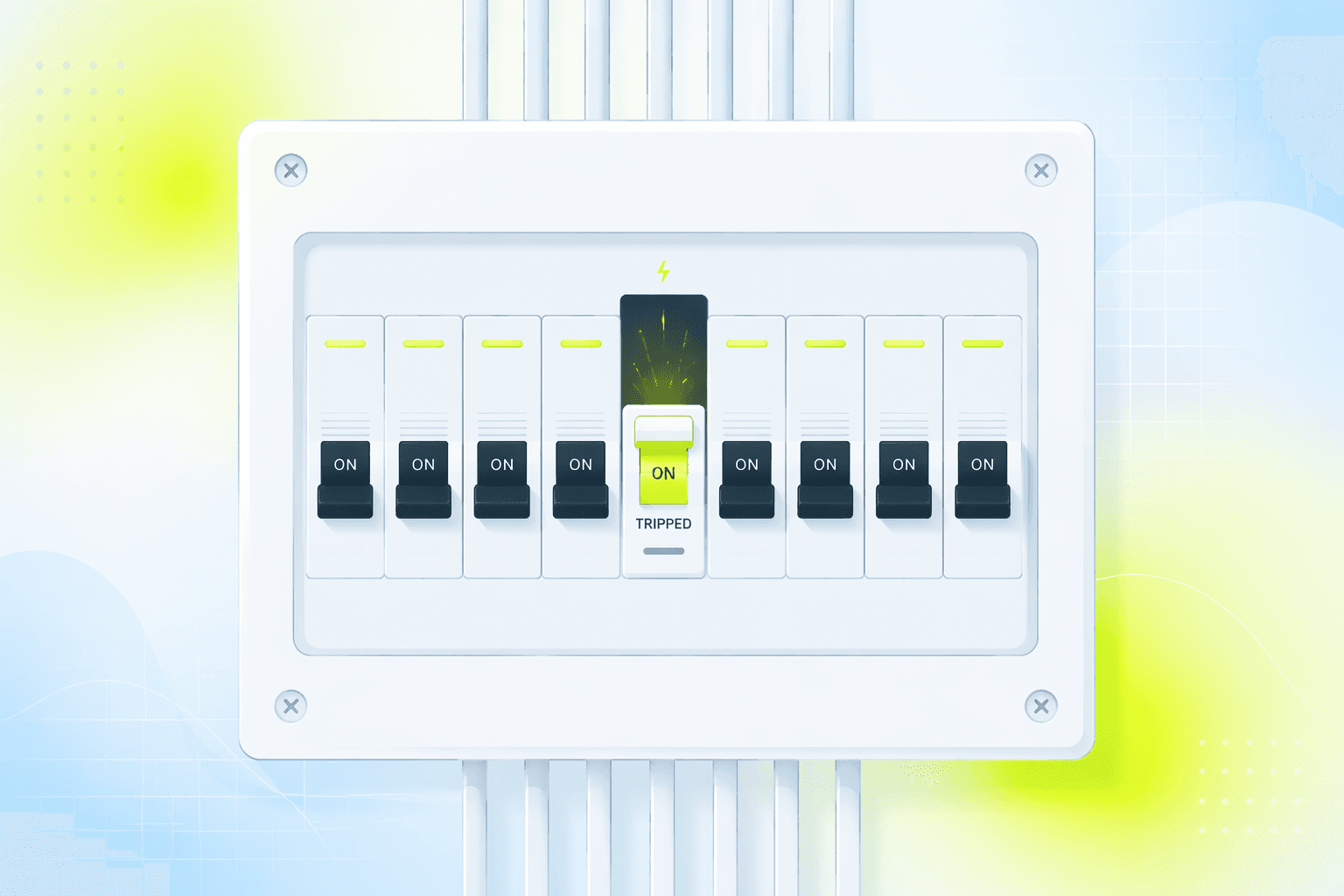
If you're researching AI agents for day trading, you've probably seen the pitch: an autonomous system that scalps the market while you sleep, no experience required. The reality is less cinematic and more useful. Intraday automation can genuinely help a disciplined trader execute a plan; it cannot manufacture an edge, out-race professional infrastructure, or rescue a losing approach. This article separates the two: what agents honestly do for retail day traders, why the profitability math is brutal for most people, and why the single most valuable agent isn't a signal generator at all. It's the one that stops you.
The uncomfortable starting point: most day traders lose
Before automation enters the picture, the base rates deserve daylight. Study after study finds that most retail day traders lose money over time. Regulators in several countries publish loss-rate disclosures on leveraged intraday products for a reason, and academic reviews of brokerage records point the same direction: sustained, cost-adjusted intraday profitability is rare.
Why is the base rate so poor? Three structural reasons, none of which involve intelligence:
- Costs scale with frequency. Every intraday trade pays the spread and often a commission. Twenty round trips a day means the market must move in your favor enough to clear twenty tolls before you earn anything. Spreads, fees, and slippage eat returns quietly, and day trading maximizes exposure to all three.
- The competition is industrial. Intraday price moves at the seconds-to-minutes scale are contested by firms with co-located servers, dedicated data feeds, and teams of engineers. Retail infrastructure competes at the minutes-to-hours scale at best.
- Emotion has more opportunities per day. A swing trader faces a handful of decisions a week. A day trader faces dozens daily, each one a chance to hesitate, oversize, or revenge trade.
Any honest conversation about AI agents in day trading starts here, because automation amplifies whatever it's pointed at. Pointed at a negative-expectancy approach, an agent just loses money more efficiently.

What AI agents for day trading can honestly do
Now the genuine value, and there is some. It just lives in execution and discipline, not prediction.
Execute a planned setup without hesitation. If your plan says "enter on a break above the opening range high with volume confirmation, stop below the range low," an agent takes that trade every time the conditions print. Humans hesitate after two losses and overcommit after two wins. The agent's tenth trade is identical to its first. If you don't yet have setups precise enough to automate, that's the prior problem to solve; a catalog of tested structures lives in day trading strategies that hold up live.
Enforce the daily loss limit. Decide in the calm of the evening that you'll stop trading at minus 2% on the day, and the morning version of you will negotiate. An agent doesn't negotiate. When the threshold is hit, it stops opening positions. Full stop.
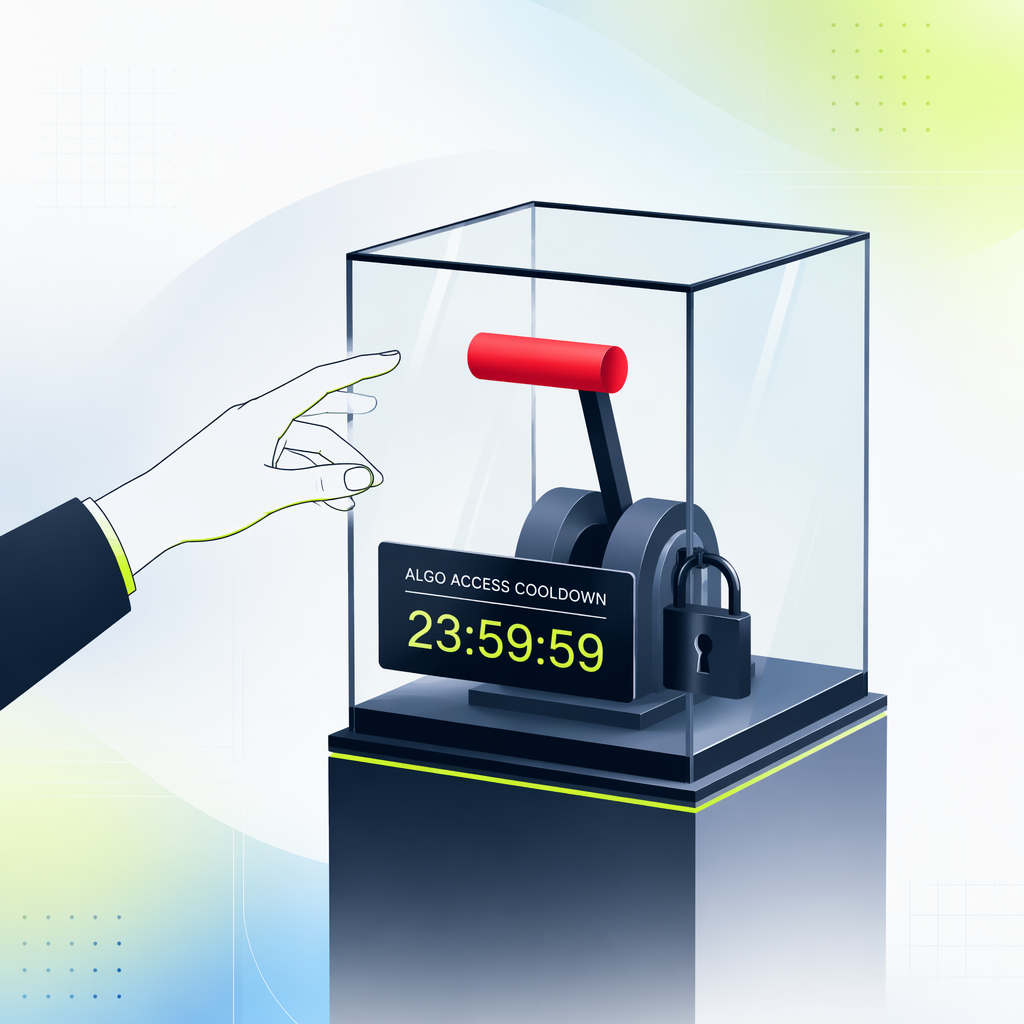
Kill revenge trading mechanically. The most expensive trades of most day traders' careers happen in the thirty minutes after a painful loss. An agent can enforce a cooldown: after a stop-out, no new entry for N minutes, or none for the rest of the session. That single rule removes the worst tail of the distribution.
Keep sizing constant when adrenaline says otherwise. Position size computed from stop distance and a fixed risk fraction, every trade, including the one right after a big win when you feel invincible.
Notice the pattern. Every item on this list is your judgment, applied by software with better nerves. None of it requires the AI to know where price goes next.
The hype: why the LLM scalper story fails
The seductive version of this technology is an AI that reads the tape, "understands" the market, and scalps its way to consistent profit. Three things break that story.
Latency. By the time a language model has ingested context and produced a decision, the fleeting microstructure opportunity it noticed is gone. Firms competing at that timescale measure reaction time in microseconds and pay for proximity to the exchange. A reasoning loop that takes seconds is not late by a little; it's late by orders of magnitude.
Costs and crowding. Fast patterns that are visible in retail data are visible to everyone, and crowded signals decay. Meanwhile the cost toll described above applies to every extra trade the eager agent takes. High frequency plus retail costs is a wealth-transfer machine pointed the wrong way.
The evidence. A 2026 audit of 77 studies on LLM trading agents concluded that evidence for durable alpha remains thin, and that the practical value sits in disciplined execution, monitoring, and research assistance rather than stock-picking magic (arXiv:2605.19337, 2026). Impressive backtests deserve extra suspicion here: research has shown LLM strategy backtests can be inflated by memorization when the test window overlaps the model's training data (arXiv:2505.07078, 2025).
A useful mental test for any product: if the pitch is "the AI finds the trades," ask for out-of-sample, cost-adjusted evidence. If the pitch is "the AI executes your rules and enforces your limits," the claim is at least architecturally honest. The broader intraday tooling picture, including signal generation and its limits, is covered in AI day trading.
The highest-value agent is a circuit breaker
Here's the position this article exists to defend: for a retail day trader, the single most valuable automation is not a signal. It's an enforced daily drawdown limit.
The logic is arithmetic. Day-trading account failures are rarely a slow bleed of small losses; they're punctuated by catastrophic days — the day someone averaged down four times, removed a stop "just this once," or traded through tilt for six hours. Cut off the catastrophic days and the whole distribution of outcomes shifts. No signal improvement compares, because signals affect the average day while the circuit breaker removes the fatal ones.
On Obside, this is a concrete, boring setting rather than a philosophy. You tell the copilot: "run my opening-range breakout on paper, risk 0.5% per trade, and if the day's realized loss reaches 2% of the account, halt all trading until tomorrow." The daily drawdown circuit breaker is a field on the agent, checked at execution time before every order. When it trips, the agent that stops you at minus 2% is worth more than any entry logic it carries, because it guarantees you'll still have an account for next month's setups. What it cannot do is stop you from opening your broker and trading manually around it, which is why the temperament question in the next section still matters.
That circuit breaker belongs to a family of execution-time protections (per-trade sizing caps, cooldowns, exposure ceilings) detailed in guardrails for AI trading agents.
Who should not day trade at all
Honesty requires this section. Automation changes the execution; it doesn't change the fit. Day trading, agent-assisted or not, is a poor match if:
- Your capital is money you need. Intraday trading has a wide dispersion of outcomes, and drawdowns arrive early. Rent money has no business in it.
- You have no tested setup. An agent automates rules. If you can't write your edge down precisely enough to backtest, there is nothing to automate yet, and the machine will faithfully execute noise.
- You're drawn by the income fantasy. "Quit your job and day trade" marketing survives because the sellers earn from courses and spreads, not from trading. Approach any such claim with the same skepticism you'd apply to a stranger guaranteeing returns.
- Your temperament fights limits. If you already know you'd override the circuit breaker, the automation can't protect you from the person holding the off switch.
For most people building wealth, lower-frequency automation (scheduled investing, rebalancing, swing-level rules with wide stops) captures nearly all of automation's benefit with a fraction of day trading's cost drag and stress. The common failure modes that push people the other way are catalogued in 10 AI trading mistakes that cost real money.
Where to go from here
Strip the hype and a clear picture remains: AI agents for day trading are execution and discipline tools. They take your planned setups without hesitation, size positions without adrenaline, and — most valuably — enforce the daily loss limit your future self will thank you for. They do not out-race professional infrastructure or turn a losing approach into a winning one, and for many readers the honest conclusion is that day trading isn't the right game at all. If you do trade intraday and want your rules enforced by something with no feelings, define your setup and your circuit breaker as a paper agent on Obside and let a few weeks of evidence speak.
Educational content only. This is not investment advice. Trading involves risk, including possible loss of capital.
FAQ
An AI agent can profitably execute a strategy that already has a genuine, cost-adjusted edge, but it cannot create that edge. Most retail day traders lose money over time, and automation applied to a losing approach simply loses faster. The realistic wins are execution consistency, enforced loss limits, and removed emotion. Demand out-of-sample, cost-inclusive evidence before believing any claim that an AI finds profitable intraday trades on its own.