
AI Agents vs. Copy Trading: Own Your Logic Instead
Copy trading borrows a stranger's decisions; an AI agent runs yours. A fair look at leader incentives, opacity, and who should honestly choose which.

The choice between AI trading and copy trading looks like a choice between two shortcuts. One lets software trade for you; the other lets a stranger trade for you. But the resemblance is shallow, and the question that separates them is not "which performs better?" It is "whose logic are you running, and can you see inside it?" This article takes copy trading seriously, names its structural problems without sneering, lays out what an agent-based alternative changes, and ends with a framework for deciding. Because for a specific kind of investor, copying really is the rational pick.
The honest appeal of copy trading
Copy trading earns its popularity. You browse profiles of traders with published track records, pick one whose curve you like, allocate money, and your account mirrors their trades from then on. The pitch lands because it solves three real problems at once.
First, effort: you skip years of learning curve and start participating immediately. Second, social proof: a visible history feels safer than your own untested judgment, and often is. Third, psychology: when someone else pulls the trigger, you are spared the hesitation and second-guessing that wreck many self-directed accounts.
None of that is fake. A disciplined leader with a sane strategy can genuinely outperform what a beginner would achieve alone in their first year. If the model has a flaw, it is not that copying never works. It is that the structure makes it hard to know when it has stopped working, and harder still to know why. Choosing a venue for this model is its own skill, which our guide to copy trading platforms covers in detail.
Four structural problems the leaderboard hides
The weaknesses of copy trading are not scandals. They are incentives, and they operate even when everyone involved is honest.
Leader incentives point away from you. Leaders are typically paid through volume rebates, follower counts, or profit shares on new highs. Every one of those rewards activity and visibility more than risk-adjusted returns. A leader who trades rarely and sizes conservatively serves followers well and ranks poorly. The ranking pressure selects for aggression.
The strategy is opaque by design. You see fills, not reasoning. When your copied account is down 18%, you cannot distinguish "normal drawdown inside a sound system" from "the leader is revenge-trading a blown thesis." With no access to the rules, you cannot tell whether to hold or leave, so followers tend to exit at the worst moment, converting a temporary drawdown into a realized loss.
Returns decay with capacity. Strategies that look brilliant with a small account often depend on entering and exiting quickly in thin markets. Pile thousands of followers onto the same signals and the collective size moves prices against the group. The published track record was earned under conditions the copiers themselves have destroyed.
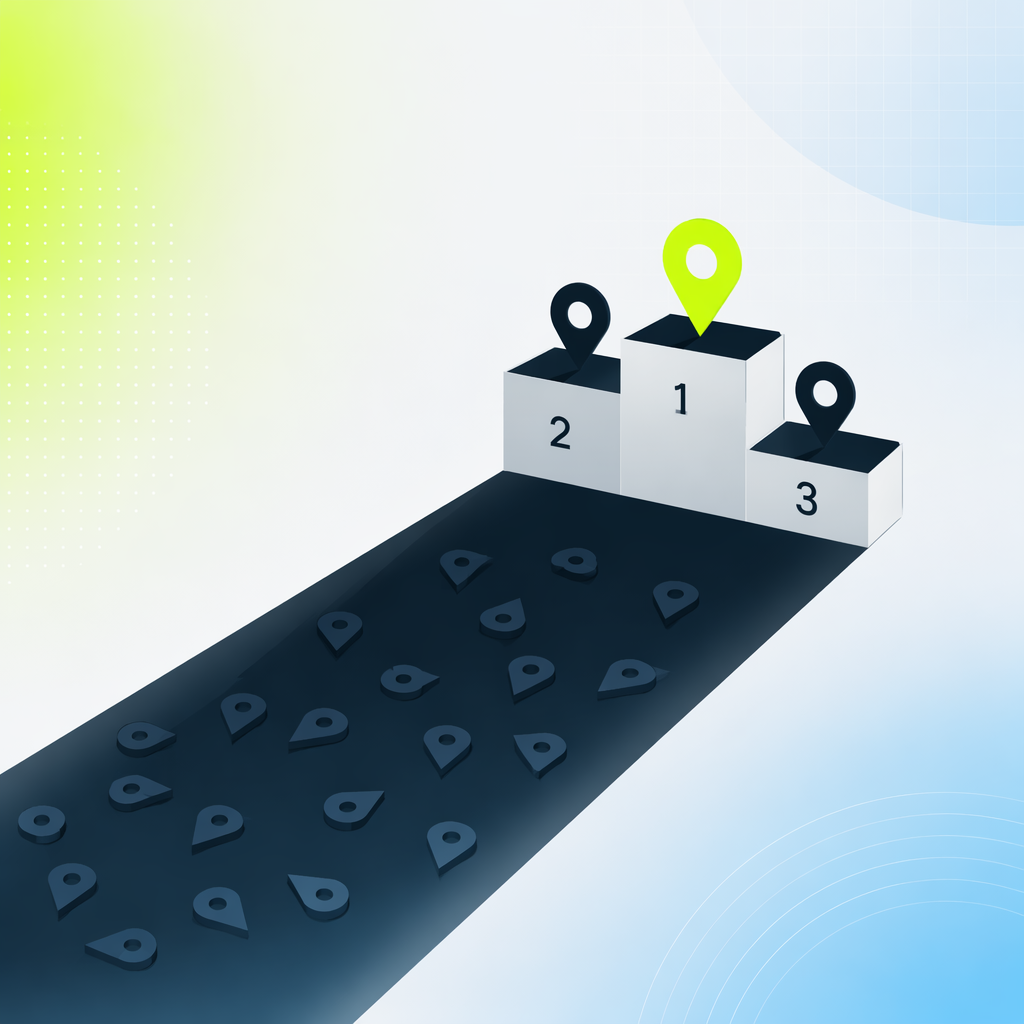
Leaderboards are survivorship engines. The traders you can see are the ones who haven't blown up yet. The ones who did have quietly vanished from the rankings, taking their followers' losses with them. Sorting by trailing returns therefore systematically shows you lucky risk-takers alongside the genuinely skilled, and the two are nearly indistinguishable from the outside.
AI trading vs. copy trading: the ownership question
An AI trading agent attacks the same three problems copy trading solves, from the opposite direction. Instead of borrowing a person, you borrow structure. You define a strategy, or adapt an existing template, and an agent executes it around the clock with mechanical consistency. What is agentic trading, precisely? Our complete guide to agentic trading defines the category; here the relevant contrast is ownership.
| Question | Copy trading | AI trading agent |
|---|---|---|
| Whose logic runs your money? | A stranger's, unseen | Yours, written down |
| Can you inspect the rules? | No, you see trades after the fact | Yes, every condition and limit |
| Can you test before risking money? | Only by trusting the track record | Backtest, then paper trade it yourself |
| What decays over time? | Leader capacity and motivation | Your strategy's edge (visibly, in your data) |
| When it fails, do you know why? | Rarely | Yes, the logs show which rule fired |
| Effort required | Minutes | Hours upfront, ongoing review |
The self-directed automation route is no longer a niche: the retail segment of algorithmic trading reached roughly $3.95 billion in 2025 and is growing around 13.4% annually (Grand View Research, 2025).
Two rows in that table carry most of the weight. Testability: with an agent, the track record you rely on is one you generated, on your parameters, including regimes you chose to stress. And diagnosability: when an agent loses money, you can read exactly which condition triggered and decide whether the logic or the market changed. A copied loss teaches you nothing except that following hurt this month.
The cost of switching sides is real, though. An agent executes your logic, which means you must have some. Effort moves from zero to nonzero, and accountability moves entirely onto you.
Templates: the middle path that isn't copy trading
Most people who feel the copy-trading itch don't actually want a stranger. They want a starting point, because a blank strategy editor is intimidating. That is what templates are for, and it is worth being precise about how they differ from copying.
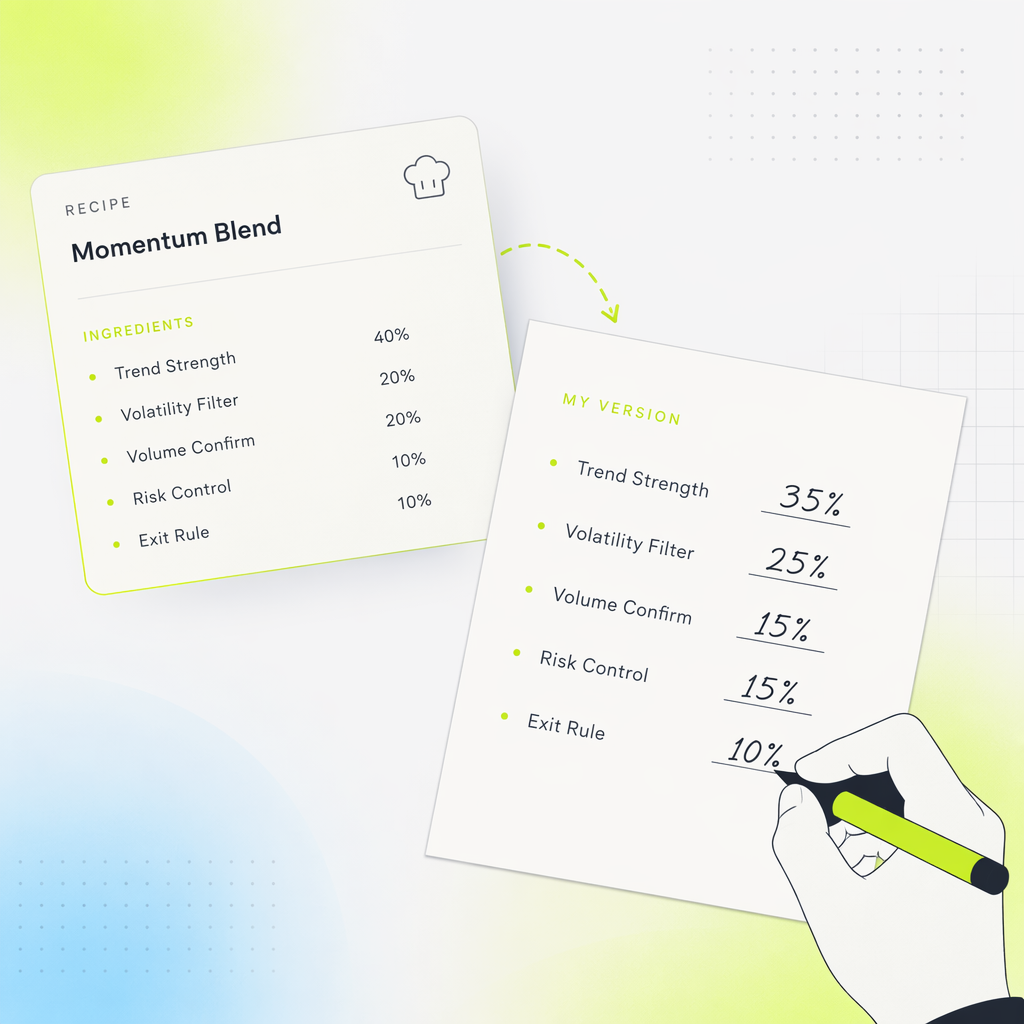
A template is a transparent recipe: a fully visible strategy structure, such as condition-aware dollar-cost averaging or a momentum entry with a trend filter, that you fork and make your own. Nothing mirrors anyone's live trades. On Obside, templates are curated recipes built by the platform, not signals published by other users; there is no leaderboard, no follower count, and no leader to decay. You open one, see every rule in plain language, and change what you disagree with.
A concrete walk-through: you pick a dip-buying template and adapt it in the chat: "Buy $150 of ETH when price drops 8% from its 7-day high, maximum twice per week, pause the agent entirely if my total drawdown on this strategy passes 12%." The copilot restates those conditions, you approve, and the agent goes to backtesting, then paper trading on live data, before any real order exists. You inherited structure and skipped the blank page, yet every number in the final strategy is yours and you watched it survive testing with your own eyes. The step-by-step version of this workflow is in our guide to creating an AI trading agent.
This resolves the copy-trading trilemma cleanly: low effort (borrowed structure), justified confidence (your own backtest of the agent, not a stranger's screenshot), and discipline (the agent executes without hesitation, which was the psychological benefit copying provided).
Who should choose what
Strip away tribal loyalty and the decision comes down to three questions: how much effort will you honestly invest, how much opacity can you tolerate, and whose failure can you live with?
Copy trading fits you if you will genuinely spend zero hours on strategy, accept that you cannot see inside the machine, treat the allocation as strictly risk capital, and diversify across several leaders instead of betting on one. Under those conditions, copying a conservative leader is a defensible way to participate while you decide whether markets interest you at all. Plenty of people fit this description, and pretending otherwise would be dishonest.
An AI agent fits you if you can spare a few hours to adapt a template and read a backtest report, you want to know exactly why every trade happened, and you would rather own a modest strategy you understand than rent a brilliant one you can't inspect. It also fits anyone who has been burned by a leader's silent style drift, because an agent's rules cannot drift without you editing them.
Neither fits you if you are looking for guaranteed income or a substitute for savings. Both routes carry full market risk, and both will have losing periods. The difference is only whether you can see the reasons.
A reasonable migration path exists, too: start by copying with a small, capped allocation, and treat it as tuition. The moment you catch yourself wanting to override the leader, you have developed opinions. Opinions are strategy in embryo, and an agent is where they go to become rules.
Where to go from here
Copy trading answers "I want in, but I don't want to decide." AI agents answer "I want to decide, but I don't want to execute by hand." Know which sentence is actually yours, and the choice makes itself. If it's the second, Obside gives you curated templates to fork, a copilot that turns your adjustments into precise rules, and a backtest-paper-live path that lets you earn trust in your own logic before real money moves.
Educational content only. This is not investment advice. Trading involves risk, including possible loss of capital.
FAQ
Neither is universally better; they distribute effort and risk differently. Copy trading costs no effort but hides the strategy, ties you to a leader's incentives, and teaches you nothing when it fails. An AI agent demands upfront work but gives you full visibility, personal testability, and diagnosable results. Better is the one whose costs you will actually pay: time for the agent, opacity for copying.