
Trading Alerts vs. AI Agents: When to Graduate
Alerts plus manual execution is a fine system with known leaks. Here is what alerts do well, where the value escapes, and the signals you're ready to automate.
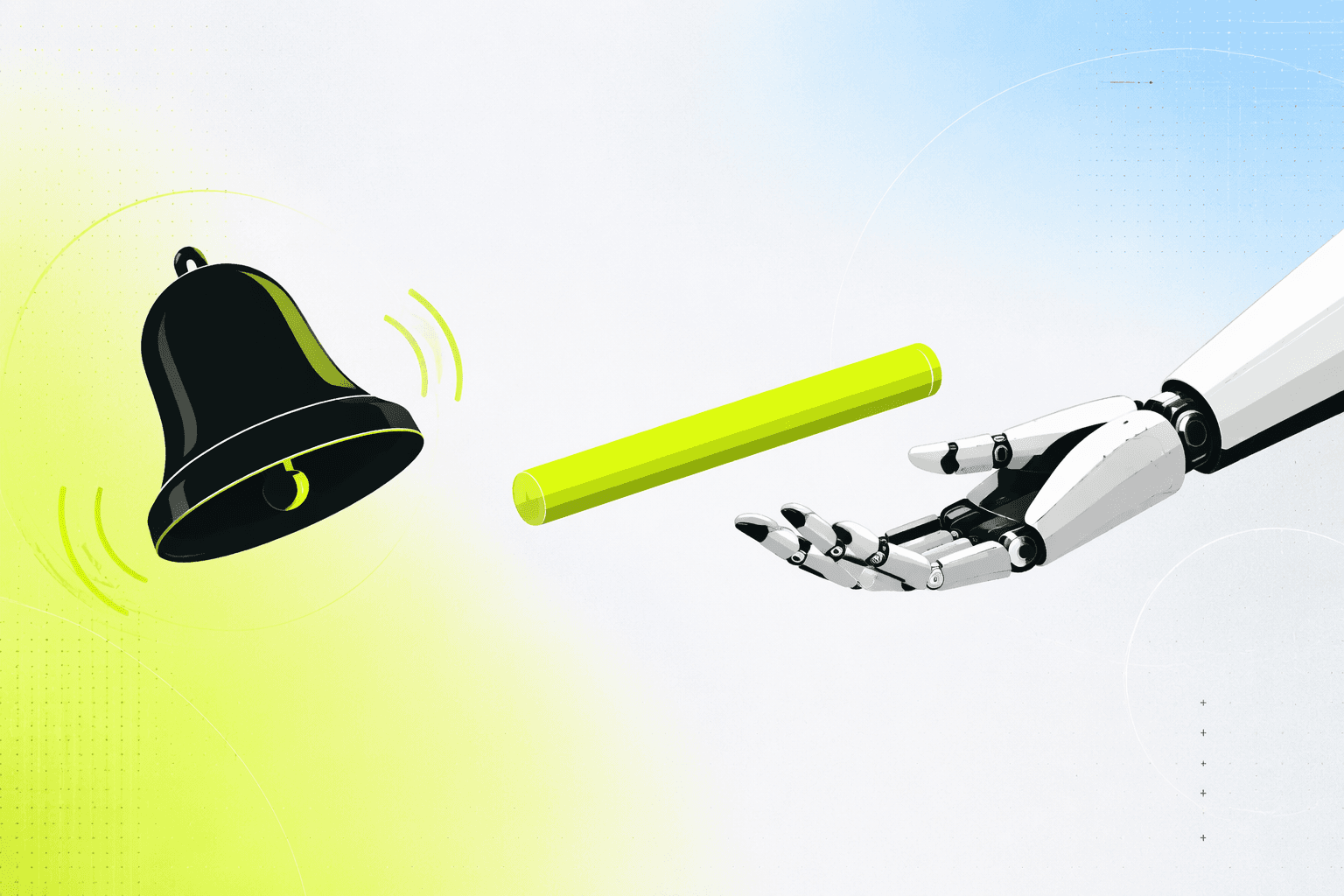
Your current system probably looks like this: automated trading alerts fire from your charting app or exchange, your phone buzzes, and you decide whether to act. That setup is not broken, and this article won't pretend it is. Alerts are how most traders first put structure around their attention, and they do that job well. But the gap between an alert firing and you executing is where a measurable slice of your edge quietly drains away. Here's an honest audit of the alert-plus-manual workflow, and a graduation path for the day the leaks start costing more than automation would.
What automated trading alerts genuinely do well
Alerts deserve more respect than automation marketing gives them. They solve a real problem with almost no downside.
They buy back your attention. A price alert at $62,000 means you stop checking the chart eleven times a day. The market watches itself; you get pinged when your level matters. For anyone with a job, that alone justifies the setup.
They carry zero execution risk. An alert cannot fat-finger an order, cannot loop, cannot misread your intent. The worst an alert can do is be ignored. When you're still forming a strategy, that safety margin is exactly right, because your rules aren't yet stable enough to run unsupervised.
They generate a record of your own behavior. Six months of alerts is a dataset: which signals you defined, which you acted on, which you overrode. Almost nobody studies that record, which is a shame, because it answers the graduation question better than any article can. Keep it.
They're cheap and universally available. Every broker, exchange and charting tool ships some version of them. No integration project, no API keys, no trust decision.
Where the alert workflow leaks value
The leaks are not dramatic. They're small, repeated, and they compound.
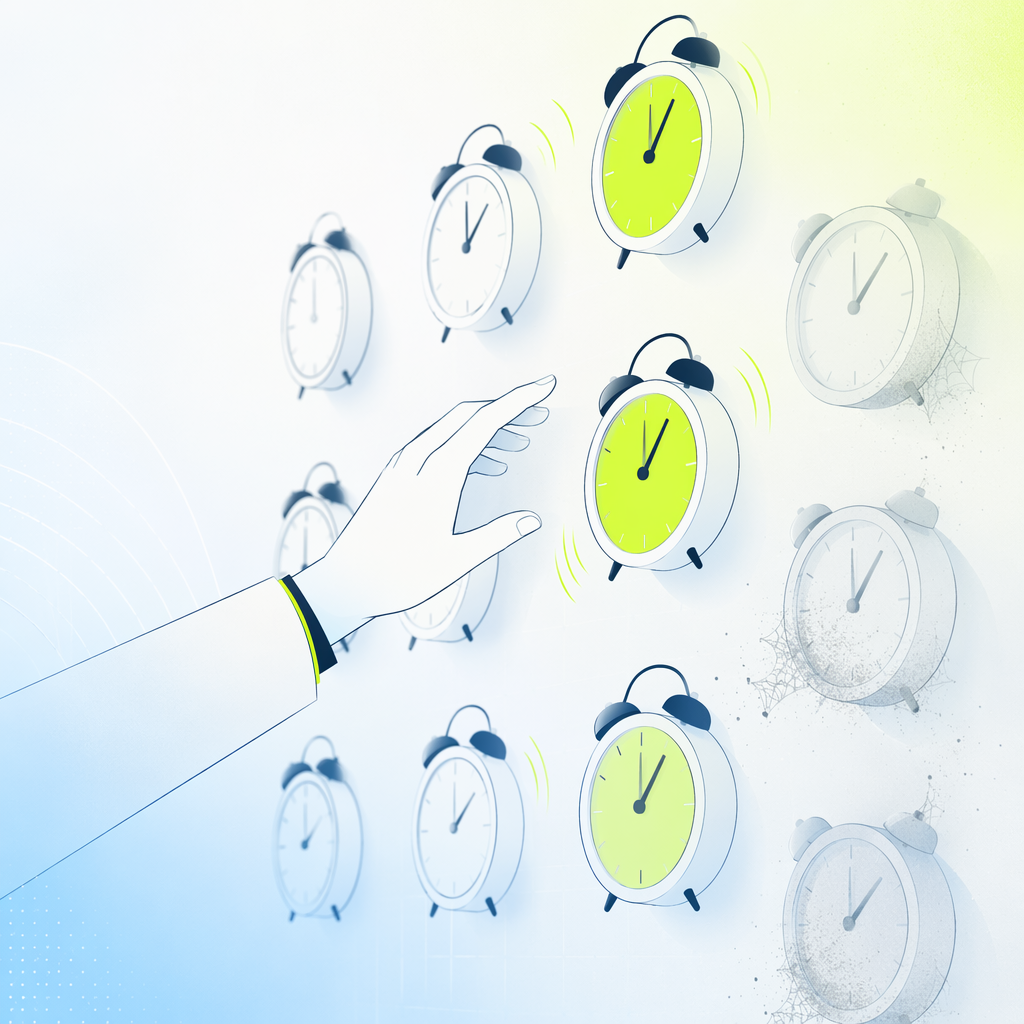
The ping you never saw. Crypto trades around the clock; your RSI(14) oversold alert on ETH fires at 2:47am and the level you spent a week waiting for is gone by breakfast. Even in stock sessions, an alert during a meeting is an alert missed. The strategy was right, the human was asleep. Nothing about better discipline fixes a biological constraint.
Hesitation at the trigger. The alert fires exactly as designed, and you stare at it. Maybe this time is different; maybe you'll wait for one more candle. You defined the signal calmly in advance precisely so you wouldn't improvise under pressure, and then you improvise under pressure. The plan-execution gap between what traders intend and what they do at the moment of action is the most expensive line in most retail P&Ls, and it never shows up on a statement.
Manual entry under stress. Acting on a 30-second-old alert means typing an order fast: wrong size, wrong direction on a short, market instead of limit, a missed decimal on a leveraged pair. Rare per trade, expensive per incident.
Alert fatigue, the silent killer. Add alerts for long enough and the twentieth ping gets swiped away unread. The signal-to-noise ratio decays until the system that was supposed to guard your attention becomes another notification stream you've learned to ignore. At that point the alert stack still exists; it just no longer does anything.
All four leaks share one shape: the conditions were correct, and the handoff from signal to action failed. That handoff is the one thing execution automation actually fixes.
The graduation path from alerts to an AI agent
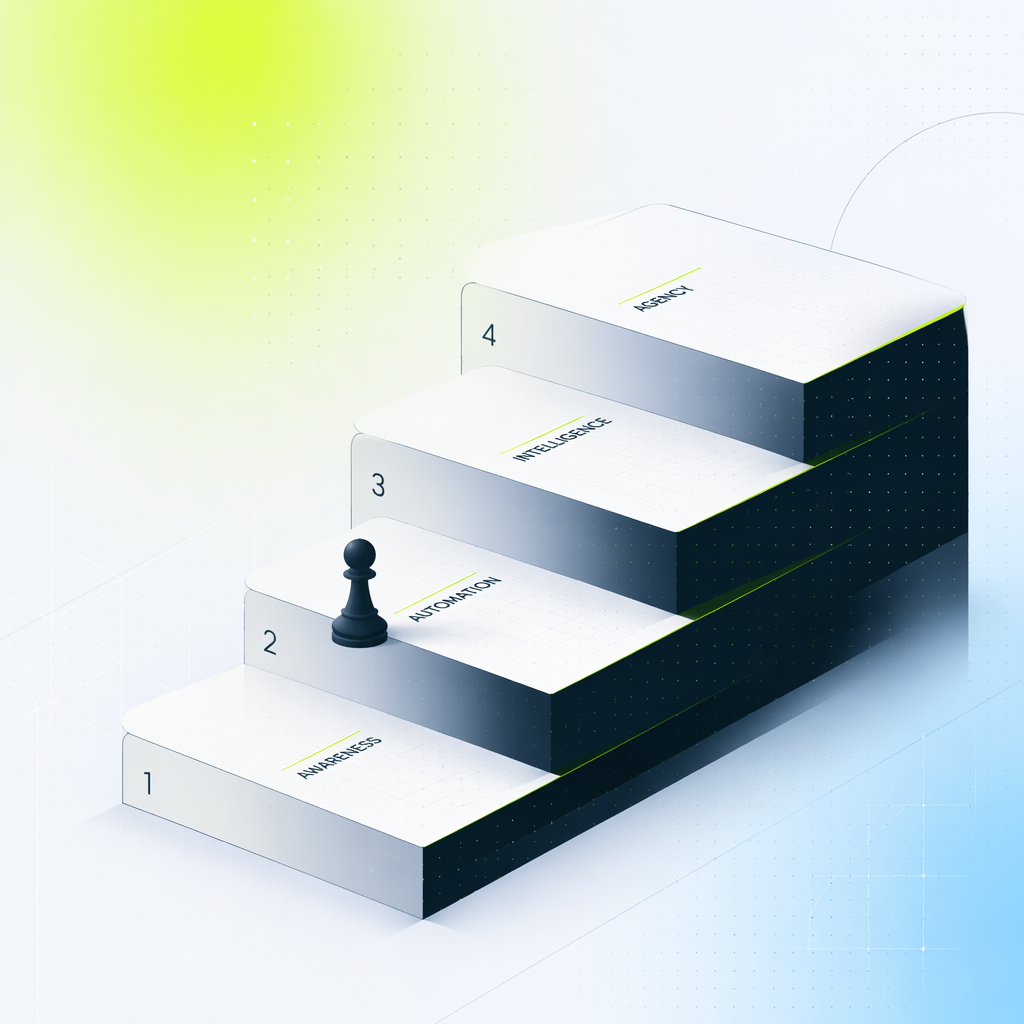
Graduating is not a leap from pings to a black box. It's four steps, each reversible, each earning the next. Retail traders are walking this path in numbers: the retail segment of algorithmic trading was estimated around $3.95B in 2025, growing at roughly 13.4% a year (Grand View Research, 2025). The sensible ones climb gradually, which is also how the levels of autonomy in AI trading are meant to be used: as rungs, not as a menu.
Step 1: alerts, tightened. Before automating anything, make your alerts precise enough to automate. "ETH looks weak" can't graduate; "ETH below $3,100 while RSI(14) on the 4-hour is under 30" can. If your alerts aren't expressible as conditions, the problem isn't tooling yet.
Step 2: alerts with prepared orders. Keep the human decision, remove the typing. When the alert fires, a pre-staged order (size, direction, limit price, stop already set) waits for one confirmation tap. This kills the fat-finger leak and shrinks hesitation, while you still hold the trigger. Conditional orders that think are the natural next rung of this same idea.
Step 3: a paper agent mirroring your alerts. Take your three most-acted-on alerts, express them as an automation with explicit sizing and stops, and run it in paper mode alongside your manual process. For a month, compare: did the agent take the trades you took? The ones you missed at 3am? The ones you hesitated out of? This side-by-side is the cheapest honest experiment in trading, and paper trading an AI agent properly has its own discipline worth learning.
Step 4: one small live agent. Promote the single condition with the best paper record to live execution, sized small, with a drawdown cap and a stop on every entry. One agent, one rule, real money you can afford to see wrong. Expand only on evidence.
The readiness signals: graduate, or stay on alerts
The dataset from your alert history answers this. Look for two patterns.
You're ready when the decision is already mechanical. If the same alert reliably produces the same action, same direction, same rough size, no debate, then you are personally executing an algorithm slowly. The thinking happened when you designed the alert; your role at 2am is pure latency. Automating a decision you always make identically loses nothing and plugs every leak in the previous section.
You're not ready when you override half your signals. If you skip, resize or reverse a large share of your alerts, the alert is not your strategy; your discretion is. Automating it would encode a rule you don't actually follow, and the agent would faithfully execute trades you'd have vetoed. Stay on alerts, but start logging why you override. Either the vetoes have a pattern (which becomes a better, automatable condition) or they're mood, which is worth knowing too.
This is where tooling design matters more than it first appears. On Obside, an alert and an agent are the same object at different autonomy settings: you might tell the copilot "alert me on Telegram when SOL drops 8% in 24h with funding negative," run it as a notification for two months, and then, once your response to it has become mechanical, promote that same condition to place a sized, stop-protected order. One field changes; the trigger logic, history and risk limits carry over. No migration, no re-platforming, no rebuilding the rule in a second tool. Whatever platform you use, look for that continuity, because the graduation path breaks when each step requires starting over.
A last honest note: some traders should never fully graduate. If your edge genuinely is discretionary reading of context, alerts plus prepared orders may be your permanent, correct level. Automation rewards consistency, not sophistication.
Where to go from here
Pull up your alert history tonight and sort it into three piles: always acted on identically, sometimes acted on, routinely ignored. Delete the third pile, add prepared orders to the second, and take the first pile through paper mode as an agent, following the same conditions you already trust. If you want a hand turning those alerts into monitored, risk-limited automations, our guide to creating an AI trading agent without code walks the build, and on Obside the alert you set today can become the agent you promote when the evidence says so.
Educational content only. This is not investment advice. Trading involves risk, including possible loss of capital.
FAQ
They can be, if you execute them consistently. Alerts solve the attention problem: they watch levels and conditions so you don't have to. What they can't solve is the handoff, missed pings outside your waking hours, hesitation at the trigger, and manual order errors. Traders who act on their alerts promptly and identically lose little by staying manual. Traders whose alert history is full of missed and overridden signals are paying a real, if invisible, cost.