
The Five Levels of Autonomy in AI Trading
A self-driving-style ladder for trading automation: five levels from alerts-only to full autonomy, the failure mode at each rung, and why most investors belong at levels 1 and 2.
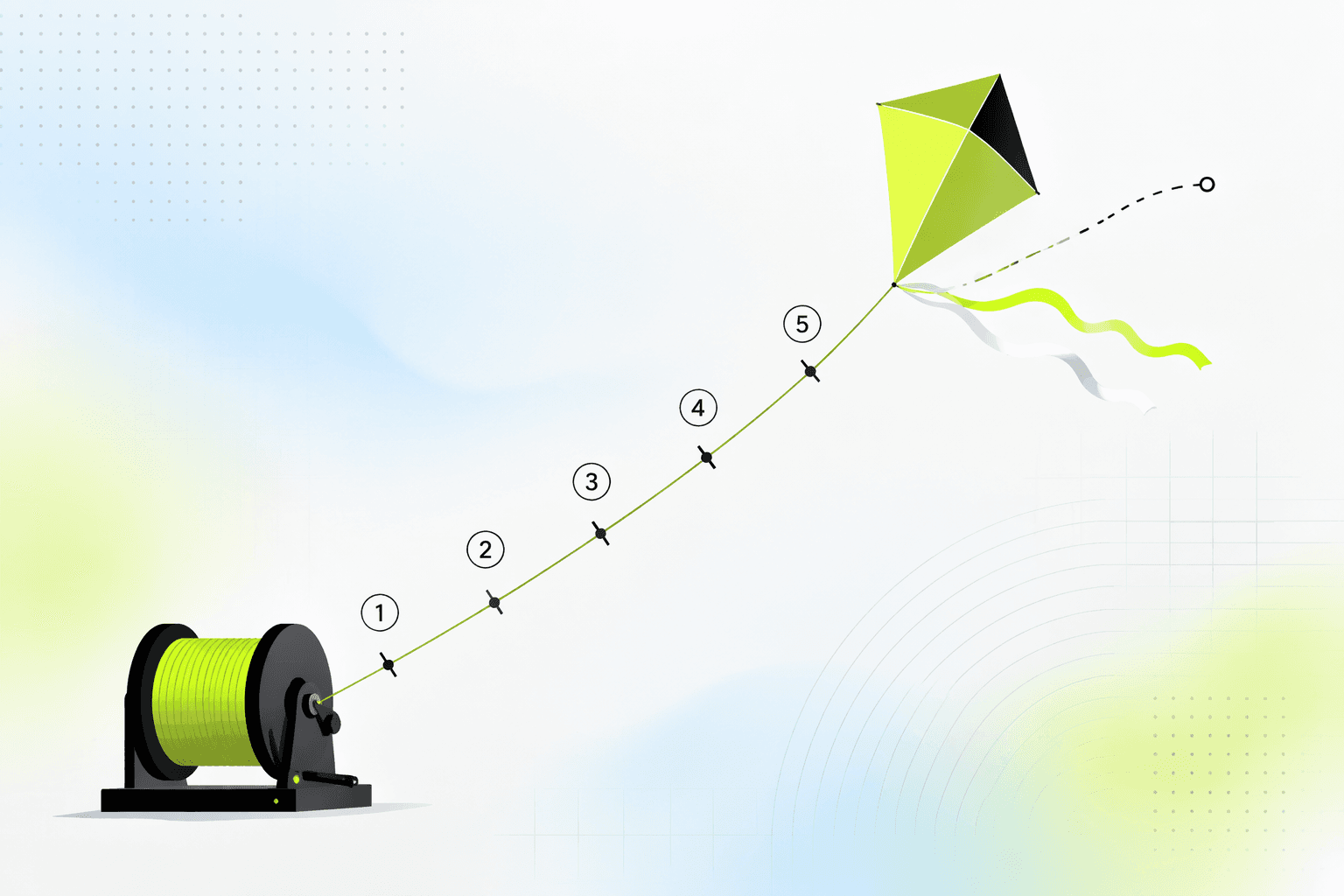
"Autonomous trading" gets sold as a binary: either you trade, or the AI does. In practice it is a dial, and the most useful trick for thinking about it comes from self-driving cars. The SAE autonomy levels ended the argument "does the car drive itself?" by replacing it with a better question: at which level? Trading automation deserves the same ladder. This article defines five levels, from alerts-only to full autonomy, and for each one: what you delegate, what you keep, how it fails, and who it suits. Most investors, we'll argue, belong at levels 1 and 2.
Why autonomous trading needs a ladder
The marketing phrase "AI trades for you" collapses an alert app and an unattended order-placing system into the same sentence. That makes any conversation about risk impossible, because the risk lives entirely in the details: who decides, who executes, who is allowed to change the strategy.
The automotive industry solved the equivalent problem with a numbered scale. Once SAE levels existed, engineers, insurers, and regulators could stop debating a slogan and start assigning responsibilities per level. Lane-keeping assistance and a driverless taxi stopped sharing a name.
Trading needs the same precision, because autonomy is not a feature. It is a budget of decisions you hand to a machine, and the only sane way to spend that budget is incrementally. Each level below transfers one class of decision: first your attention, then your execution, then your strategy's maintenance, and finally your oversight itself. The ladder exists so you notice which transfer you are making. It presumes the perceive-reason-act pattern covered in what agentic trading is; the levels measure how much of the "act" you release.
The five levels of autonomous trading at a glance
| Level | Name | The machine | You | Typical failure |
|---|---|---|---|---|
| 0 | Watching | Monitors conditions, sends alerts | Decide and execute everything | Alert fatigue; the 3am ping you missed |
| 1 | Suggesting | Proposes complete, sized trades | Approve or reject each one | Approval becomes a reflex |
| 2 | Executing | Executes your fixed rules inside hard limits | Author rules, set limits, hold the kill switch | A bad rule executed faithfully |
| 3 | Adapting | Proposes strategy changes, runs them after your review | Review and veto each adaptation | Review theater; drift you no longer understand |
| 4 | Autonomous | Changes and executes strategy with no human gate | Retain accountability, nothing else | Unbounded blast radius |
Notice the shape: each rung transfers a different class of decision, not just more of the same one. Level 0 to 1 transfers analysis. Level 1 to 2 transfers execution. Level 2 to 3 transfers adaptation. Level 3 to 4 transfers oversight itself — the only transfer on the ladder with no built-in way to catch its own mistake.
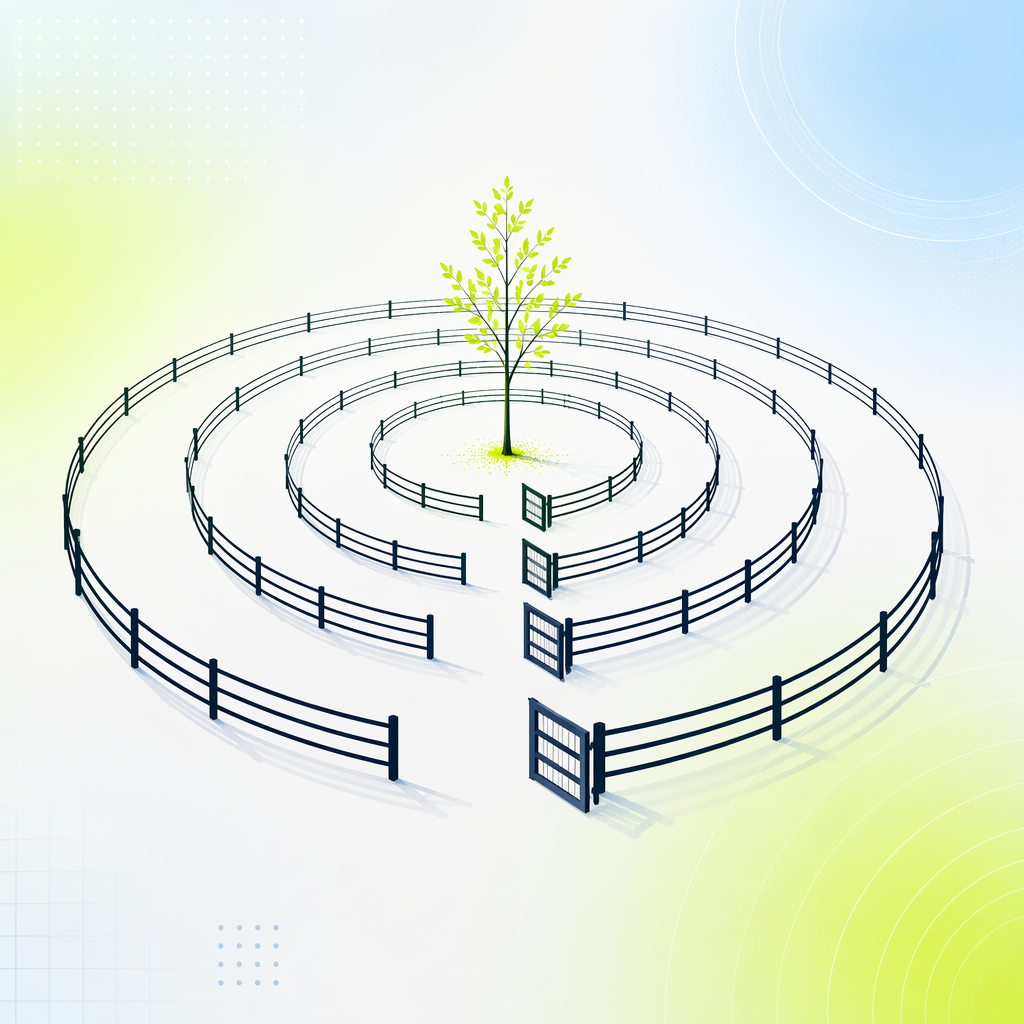
Levels 0 and 1: the machine watches, you decide
Level 0 is monitoring with a voice. You define conditions (a price crossing a level, RSI(14) closing under 30, news severity spiking on a holding) and the system pings you. What you delegate is attention: the screen-watching that eats evenings and never sleeps well. What you keep is everything else. The failure mode is fatigue: enough pings and you start ignoring them, which means the one that mattered arrives at 3am and dies unread. Level 0 suits beginners, discretionary traders, and anyone auditioning a new condition before trusting it.
Level 1 upgrades the ping to a proposal: asset, direction, size, stop, ready for a yes or a no. You delegate the analysis and preparation; you keep the final decision on every single trade. The failure mode is subtle and almost universal: after thirty consecutive approvals, approval stops being a decision. At that point you are effectively running Level 2 without Level 2's hard limits, which is the worst of both rungs. The honest use of Level 1 is as an instrument: if you find yourself overriding half the suggestions, your rule does not match your intent yet, and the machine just told you so.
The same condition can live at either rung. "Alert me when ETH drops 5% in 24 hours" is Level 0. "When that happens, propose a $200 buy with a 10% stop for my approval" is Level 1. Nothing about the logic changed; the decision budget did.
Level 2: auto-execution inside hard limits
This is where automation starts paying rent. Rules you wrote execute without you, but inside caps that no execution can cross: per-trade sizing, maximum exposure, stop-losses, a drawdown circuit breaker. The mechanism that makes Level 2 sane is that these limits are enforced at execution time, outside the strategy logic, so a misfiring rule cannot argue its way past them.
You delegate the doing. You keep the deciding: strategy authorship, the limits themselves, and the kill switch. That order matters enough to state as a rule: delegate the doing before you delegate the deciding.
A worked Level 2 definition: "Buy $150 of a Nasdaq ETF every Friday, skip the buy if the ETF is within 2% of its 52-week high, never let the position exceed 10% of the portfolio, halt the agent if account drawdown reaches 12%." Every clause is either a rule that executes or a limit that binds. Nothing in it requires trust in the machine's judgment, only in your own definition, which is exactly what a backtest and a paper-trading run exist to test before real orders flow.
The failure modes are two. First, faithful execution of a bad rule: consistency is a multiplier, and it multiplies losses as happily as gains. Second, limits set so wide they never bind, which is Level 2 cosplay. Level 2 suits anyone with a rule that survived validation, and it is where most automated retail money should sit.
This lower half of the ladder is deliberately how Obside is shaped: any condition can run as a pure alert to Telegram, WhatsApp, or push (level 0), the same agent definition then rehearses in paper mode against live data with no orders, and going live simply activates execution with sizing, stops, drawdown caps, and leverage limits enforced on every order. One definition, promoted rung by rung.
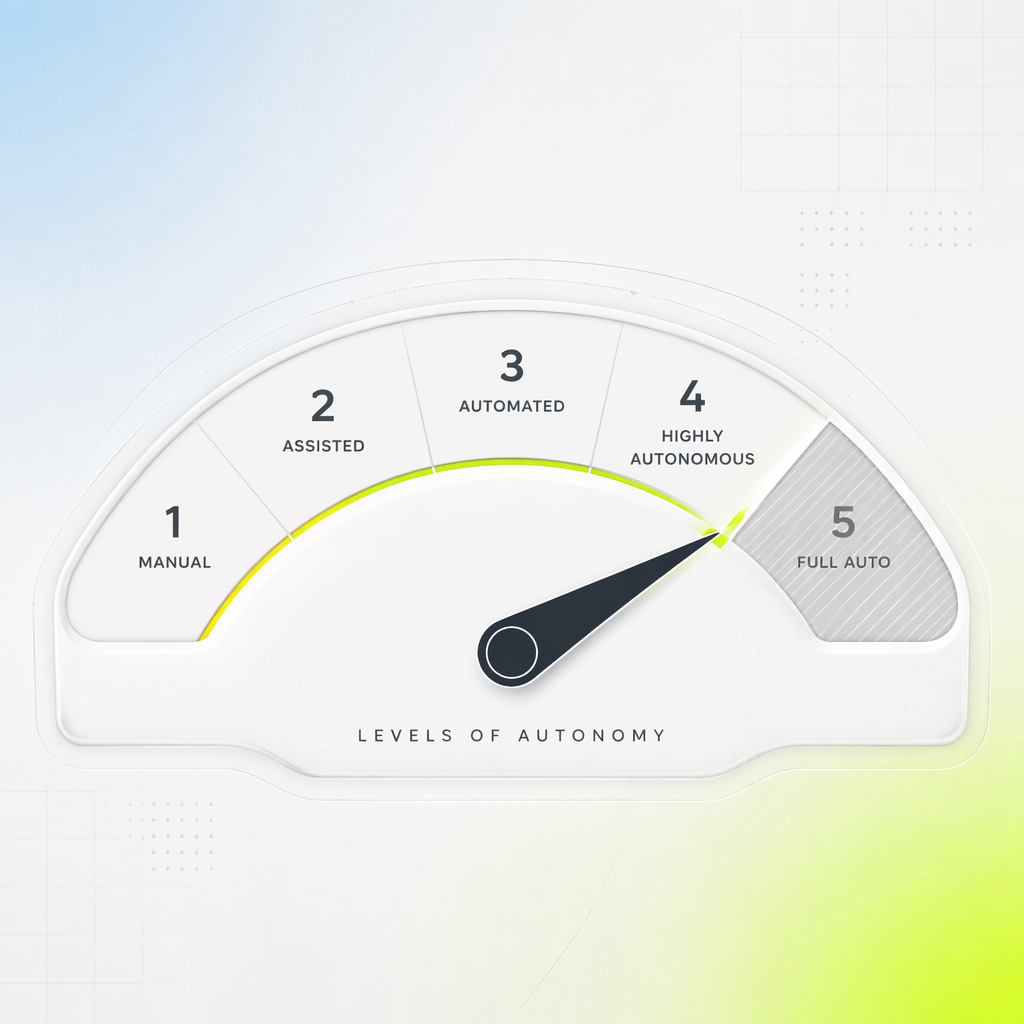
Levels 3 and 4: adaptation, and the autonomy trap
Level 3 hands the machine your strategy's maintenance. It notices staleness and proposes changes: retune a parameter after a regime shift, widen stops as volatility rises, retire an entry condition that stopped working. Each change waits for your review. What you delegate is noticing; what you keep is judgment on every modification. The failure mode is review theater: approving diffs you no longer truly understand, until one day you are running a strategy you could not explain to yourself. Level 3 suits experienced automators with genuine review discipline and modest size, not newcomers.
Level 4 removes the gate entirely: the machine adapts and executes with no human in the loop. Nobody serious runs it, for three concrete reasons. Accountability does not transfer: regulators treat AI-assisted trading under existing supervision and responsibility rules, so the outcomes remain yours regardless of who pressed the button (FINRA 2026 Annual Regulatory Oversight Report, Jan 2026). The evidence is not there: a 2026 audit of 77 studies on LLM trading agents found support for durable alpha remains thin, locating the real value in disciplined execution and monitoring rather than autonomous stock-picking (arXiv:2605.19337, 2026). And the blast radius is unbounded by design, because the component that would have stopped the damage is the one you removed.
Put plainly: Level 4 is not the top of the ladder. It is the rung where you can no longer answer for your own account. The fuller case for keeping override authority and approval gates, and for what should always require a human, is made in human-in-the-loop trading.
Where you belong on the ladder
One rule sorts almost every situation: your level should be earned by evidence at the level below, one rung at a time. Backtest before paper, paper before live, alerts before execution, small size before full size. If you are overriding half your Level 1 suggestions, stay at Level 1 until the rule matches your intent. If your Level 2 limits have never once bound, they are decoration, and proper guardrails are the difference between Level 2 and gambling with extra steps.
For most readers the honest destination is levels 1 and 2: bounded delegation, checkable evidence, and a kill switch you actually hold. On Obside, that climb is the default workflow — describe your rule once in plain language, run it as an alert, rehearse it in paper, then go live inside hard limits, moving up only when your own evidence says so.
Educational content only. This is not investment advice. Trading involves risk, including possible loss of capital.
FAQ
Autonomous trading is software executing trades under delegated authority, and the delegation comes in degrees. A practical framework has five levels: alerts only (0), suggested trades you approve (1), auto-execution of your rules inside hard limits (2), strategy adaptation with human review (3), and full autonomy with no human gate (4). Most retail systems marketed as "autonomous" operate at levels 1 or 2.