
AI Hallucinations in Trading: Guardrails Beat Blind Trust
Why language models invent numbers, what that means when money is attached, and a checklist for judging whether any AI trading product can hurt you.

Ask a language model for NVIDIA's Tuesday closing price and it will answer fluently, instantly, and sometimes wrongly, with no change in tone between the two cases. That is the whole problem of AI hallucinations in trading, compressed into one sentence. When the output is an essay, a fabricated detail costs you an edit. When the output feeds a position, it costs you money. This article explains what hallucination actually is, why financial questions provoke it more than most, what the measured rates look like, and the architecture, plus a buyer's checklist, that keeps fabrication away from your orders.
What a hallucination actually is
The word suggests a malfunction, a glitch to be patched out in the next release. That framing misleads you into waiting for the fixed version. Hallucination is better understood as the model doing exactly what it was built to do, in a situation where that is not what you need.
A language model generates the most plausible continuation of the text so far. Plausibility is the only currency. There is no internal ledger with facts on one side and inventions on the other, no flag that flips when the model crosses from recalling to composing. "Apple reported revenue of" gets completed with a number shaped exactly like an Apple revenue figure, because millions of similar sentences taught the model what such numbers look like. Whether the specific digits are true is a property of the world, and the model is not consulting the world. It is consulting the shape of language about the world.
This is why hallucinated output is so hard to catch by eye. It is not garbled or hedged. It arrives in the same confident register as correct output, with the same formatting, often surrounded by details that are accurate. Scale and fine-tuning reduce the frequency; nothing about the mechanism removes it. A system design that assumes occasional confident fabrication is being realistic, not paranoid.
Why AI hallucinations in trading bite harder than elsewhere
Finance concentrates every trigger for fabrication into one domain.
Numbers dominate, and language statistics cannot verify arithmetic. Prices, percentages, ratios, dates: a model can produce a P/E of 23.4 as fluently as 32.4, and both look equally right on the page. Nothing in next-token prediction checks the subtraction.
Entities collide. Thousands of tickers, many nearly identical, plus crypto's habit of naming meme tokens after famous assets. A model asked about "SPX" may blend the S&P 500 index with an unrelated token of the same ticker, and deliver the blend smoothly.
Freshness is structural, not incidental. Markets move every second; training data ends somewhere. Asked about anything after its cutoff, a model has only one honest answer and a strong stylistic pull away from giving it. The plausible-sounding stale price is the default failure, not the rare one.
The costs are asymmetric. A hallucinated fact in a movie summary wastes a moment. A hallucinated support level sizes a real position.
The measured rates justify the concern. Financial-LLM benchmarks such as FailSafeQA have documented hallucination on a substantial share of finance questions, with one 2024 study finding rates up to roughly 41% without safeguards (FailSafeQA and related benchmarks, 2024–2025). The same literature is equally clear on what works: grounding answers in retrieved data, constraining the model to structured tool calls, and keeping human approval gates in the loop. In other words, the fix is known, and it is architectural.
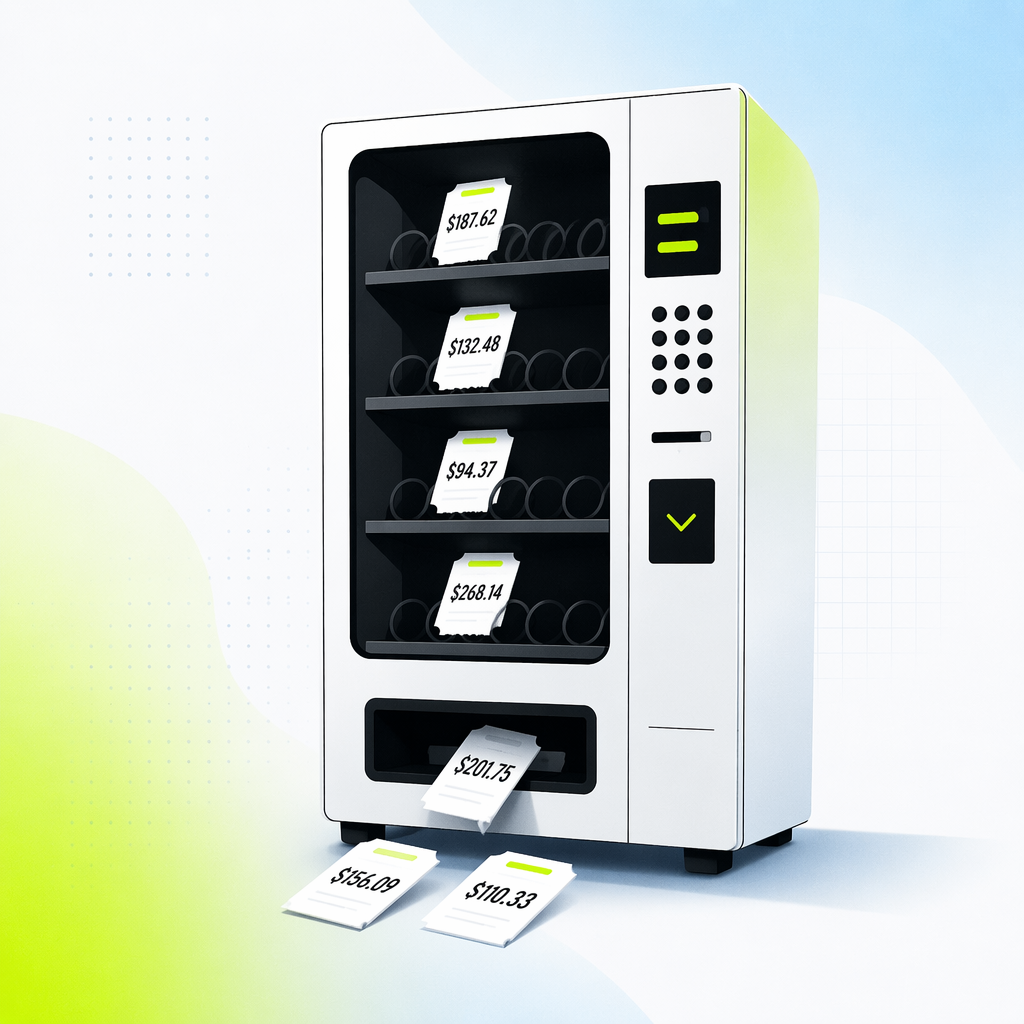
The architecture answer: four load-bearing walls
You do not make a model stop inventing. You build a system where inventions have nowhere to go. Four principles carry the weight.
1. The LLM is never the source of numbers. Every price, indicator value, balance, and volume figure comes from a market-data feed or an exchange API, retrieved at the moment of use. The model may talk about numbers it was handed; it must never supply them from memory. This single rule eliminates the largest class of damage.
2. Actions go through typed tool calls. The model does not emit free text that something downstream interprets as an order. It fills defined slots in a defined schema: asset from a validated list, quantity as a bounded number, order type from an enum. A fabricated ticker fails validation instead of reaching a venue. Think of the stencil, not the pen: whatever the model writes, only rigid shapes pass through.
3. Parsed intent is validated back to the human. Between your sentence and any running automation sits a restatement step: here is the exact condition, size, and limit I understood; confirm it. Misreadings and inventions become visible at the cheapest possible moment, before anything is live.
4. Everything is logged. Every interpretation, data fetch, and order attempt leaves a record. When something surprises you, the log answers "what did it think it was doing" with evidence rather than vibes.
This is the split Obside runs on. The copilot's LLM does the language work: it interprets "sell half my position if it drops 8% from here" and drafts the automation. But "here" is resolved by the pricing engine from live data, the 8% is computed deterministically, the order is a typed instruction routed with risk checks applied at execution time, and the restated conditions wait for your approval before the agent exists. A hallucination can misdraft a proposal you will read and reject; it has no path to placing a trade, because the components that touch money do not improvise. The broader division of labor between language models and deterministic engines is mapped in what LLMs can and can't do in trading.
The "can this hurt me" checklist
Use these eight questions on any AI trading product, including ones you have already connected. Each comes with the red-flag answer that should end the evaluation.
| # | Question to ask | Red-flag answer |
|---|---|---|
| 1 | Where do prices and indicator values come from? | "The AI knows the market" or no clear answer. Numbers must come from named data feeds, not the model. |
| 2 | Can the model free-type an order, or does it fill a validated schema? | Free text anywhere between model and execution. |
| 3 | Does the system restate what it understood before running it? | Your sentence goes straight to a live automation. |
| 4 | What happens when data is missing or stale? | It answers anyway. The safe behavior is refusing or flagging, never improvising. |
| 5 | Is there a paper mode using the same pipeline as live? | Simulation is a separate, prettier code path, or absent. |
| 6 | Are risk limits enforced outside the model? | Limits are part of the prompt. Prompts are suggestions; execution-time checks are laws. |
| 7 | Can you audit every decision after the fact? | No log of what was interpreted, fetched, and sent. |
| 8 | Does marketing claim the AI "predicts" prices? | Yes. Prediction claims plus a language model equals confident fiction with a subscription fee. |
Two of these deserve emphasis. Question 4 is the quiet killer: a system that cannot say "I don't know" will substitute plausibility exactly when conditions are strangest, which is exactly when you are relying on it. And question 6 separates theater from engineering. A risk rule written into a prompt can be ignored by the same mechanism that ignores facts; a risk check in the execution path cannot. If a vendor cannot tell you which kind they have, assume the prompt kind.
Products failing three or more of these questions are not "early." They are wired so that fabrication can reach your money. The rest of the risk register beyond hallucination, from overfit backtests to key security, is ranked in the real risks of AI trading agents.

What hallucination does not mean
It would be a wrong conclusion to swear off language models in trading altogether, because the failure is specific, not general.
LLMs are genuinely strong at the language layer: turning a paragraph of intent into candidate rules, summarizing a 40-page filing to the three items that touch your holdings, explaining why a backtest's drawdown clusters in one regime, critiquing the logic of a strategy you wrote. In these uses, fabrication is either absent (the source text is provided) or cheap to catch (you review the output before anything happens). Hallucination becomes dangerous only when model output flows toward execution without a deterministic checkpoint or a human one.
So the mature position is neither trust nor abstinence. It is placement: language models on the language, engines on the numbers, gates on the actions. Where those gates belong, and which decisions should always wait for a person, is the subject of human-in-the-loop trading. And if your current workflow is pasting a chatbot's suggestions into a broker by hand, the specific failure modes of that setup are covered in ChatGPT for trading.
Where to go from here
Hallucination is not a scandal about AI; it is a property of the tool, like recoil in a rifle. You do not fix recoil, you build a stock and a stance around it. Ask the eight questions of anything that wants access to your accounts, refuse products where the model touches numbers or orders directly, and insist on the restatement step every time.
If you want to see the contained version in practice, Obside puts the LLM on interpretation duty only, feeds every number from live market data, and holds every automation behind your explicit approval, so the worst a hallucination can do is propose something you read and decline.
Educational content only. This is not investment advice. Trading involves risk, including possible loss of capital.
FAQ
It is when a language model produces false but plausible-sounding financial information: an invented price, a wrong earnings date, a misattributed ticker, or reasoning built on facts that do not exist. It happens because these models generate statistically likely text rather than verified facts, and they signal no difference between recalled and fabricated content. In trading, such output can misinform decisions or, in badly built systems, feed automated orders.